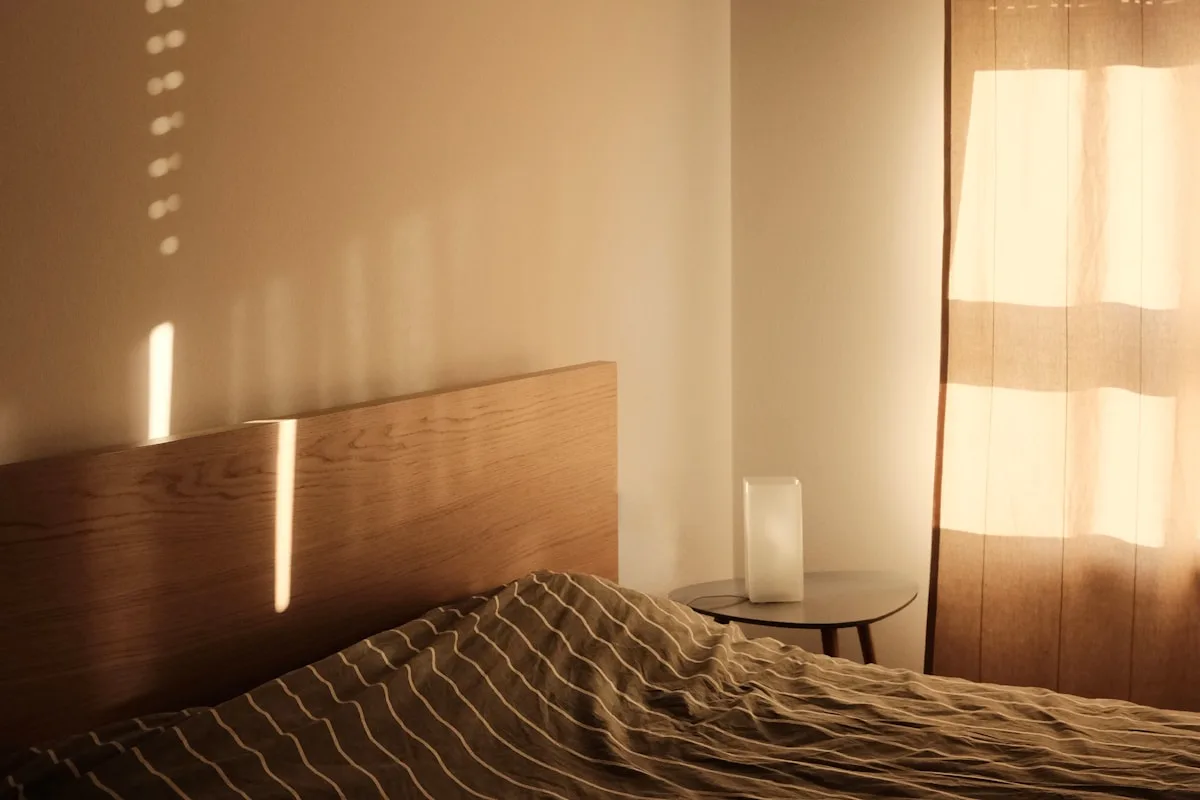
You know the feeling from summer nights: you toss and turn, the duvet goes on and off, and when you wake up it feels like you barely slept. That's not your imagination. Heat is one of the most common causes of poor sleep, and it's easy to overlook the rest of the year.
What happens in your body
Your body temperature runs on a daily rhythm. It peaks in the afternoon and falls towards the evening. That drop is part of the body's signal to fall asleep: as your core temperature falls, you get sleepy, and through the night it keeps going down before turning back up towards morning.
To shed heat, the body widens the blood vessels in your hands and feet and radiates warmth out through the skin. That's why warm feet often make it easier to fall asleep – they help the rest of the body cool down.
If the room is warm, this works less well. The body struggles to get rid of the heat, your core temperature doesn't fall the way it should, and sleep becomes restless.
What the research shows
A review from Japan (Okamoto-Mizuno & Mizuno, Journal of Physiological Anthropology, 2012) went through the research on how the surrounding temperature affects sleep. The picture is consistent: the body needs to be able to lower its temperature to sleep well, and heat in the bedroom disrupts that process.
A warm room led to more awakenings and less of both deep sleep and REM sleep – the phases that matter most for recovery. Humid heat was the worst, because sweat doesn't cool as effectively. Cold affected sleep too, but clearly less, as long as there was bedding and clothing to keep warm.
Another point from the review: the temperature closest to the body – under the duvet – is what matters most, and that's shaped by the room, the bedding and what you're wearing.
What to do
You don't need a thermometer. Go by feel: it should feel slightly cool when you get in, and comfortable once you've been under the duvet for a while.
- Air the room before bed. Open the window for a while in the evening, especially if the room has been shut all day.
- Turn the heating down in the bedroom. Keep it cooler there than in the rest of your home. In summer, close the curtains during the day so the sun doesn't heat the room up.
- Match your duvet to the season. A thinner duvet in a breathable material makes it easier for the body to regulate itself. Two thin ones are more flexible than one thick one.
- Warm shower, cool bed. A warm shower a while before bed widens the blood vessels, so the body then cools down faster. Warm feet and a cool body is a good combination.
Try it yourself
Try a week with a cooler bedroom. Change nothing else. Log in the app how you slept and how you feel in the morning.
Many people notice the difference in how many times they wake during the night. Fewer awakenings, less duvet-flipping – and a morning that feels lighter.

Markus Kask
Health coach & founder of GoMotion
Want to follow this up in everyday life?
The GoMotion app helps you build habits around sleep, movement, nutrition and focus – one step at a time.
Get the app