You're in bed, you turn off the ceiling light and pick up your phone. Just a quick check. A while later you're still scrolling, and once you finally put it down, it takes a while to fall asleep.
It's not just the content keeping you awake. It's the light.
What light does to your brain
Your brain has a built-in clock that decides when you get tired and when you feel alert. It's set mainly by light. Bright light means "day", darkness means "night".
When it gets dark in the evening, your body starts releasing melatonin, the hormone that signals it's time to wind down. Light entering your eyes holds that signal back. That's true of all light, but the light from a screen sits close to your eyes, is fairly bright, and contains a lot of the bluish light your clock is especially sensitive to.
So when you lie in the dark with a glowing screen a short distance from your face, your brain gets two conflicting messages. The room says night. The screen says day.
What the research shows
A study from Harvard (Chang et al., PNAS, 2015) had participants read in bed for a few hours before bedtime, on several consecutive evenings. In one period they read on a light-emitting e-reader, in the other a regular printed book. Everything else was kept the same.
The difference was clear. After the e-reader evenings, it took longer to fall asleep. The body produced less melatonin in the evening, and the internal clock shifted later. Participants also got less REM sleep – the phase where the brain processes memories and emotions.
Perhaps the most interesting part: the next morning, participants felt less alert and needed longer to feel fully awake, even though they'd had the same number of hours in bed.
So the sleep wasn't just later. It was worse, and the effect carried over into the next day.
What to do
You don't need to banish your phone from the bedroom. But you can change what happens in the last stretch before you fall asleep.
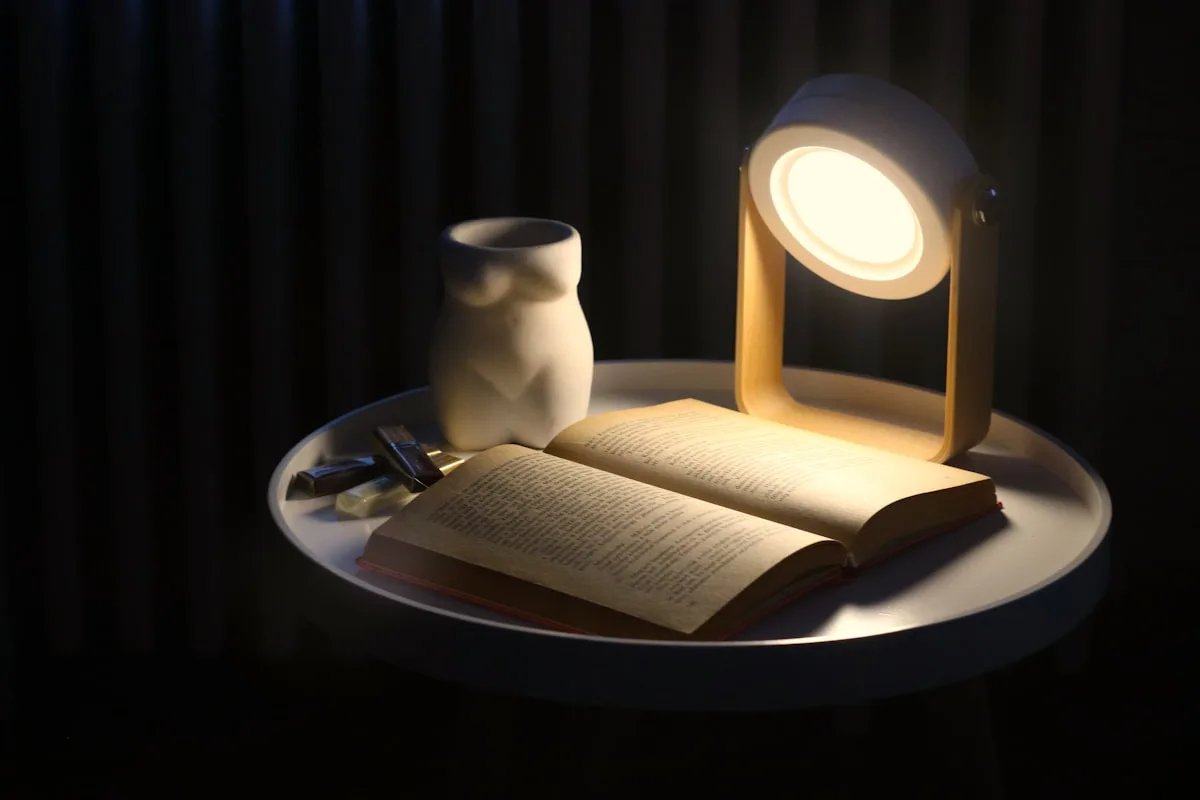
- Swap the screen for paper in bed. A book or a magazine gives you the same wind-down without the light in your eyes. That's exactly the swap the study made.
- Set a time when the screen goes off. Pick a point in the evening when the phone goes on charge away from the bed, ideally in another room. Then you don't have to decide every night.
- Dim it if you really must. Night mode and the lowest brightness are better than full light, but they're no substitute for putting the screen away. Hold it further from your face.
- Get daylight in the morning. Light at the right time strengthens the clock, just as light at the wrong time disrupts it. Some time outdoors in the morning helps your body find its rhythm.
Try it for a week
Swap your phone for a book in bed for seven evenings. Change nothing else. Note in the app how rested you feel in the morning.
Most people notice they fall asleep faster. But the big difference usually shows up in the morning – in how easy it is to get going.

Markus Kask
Health coach & founder of GoMotion
Want to follow this up in everyday life?
The GoMotion app helps you build habits around sleep, movement, nutrition and focus – one step at a time.
Get the app