You don't have time to exercise. Work, family, the commute – the hours run out. And when you finally get a free evening, you're too tired.
There's a kind of movement that doesn't need time, a change of clothes or a gym membership. It takes a minute at a time and fits into the day you already have. Researchers call it vigorous intermittent lifestyle activity. We call it exercise snacks.
What happens in your body
When you run for the bus, take the stairs at speed or carry heavy shopping in from the car, the same thing happens as during an interval session – just shorter. Your heart rate spikes, your breathing gets heavy, your muscles work close to their limit. Your body registers a clear signal: this requires capacity.
The signal is what matters. Your heart, blood vessels and muscles adapt to load – not to how long you kept going or whether you were wearing workout clothes. A few short bursts in a day aren't the same as a longer session, but they are far from nothing.
What the research shows
A study (Stamatakis et al., Nature Medicine, 2022) looked specifically at people who did no exercise at all in their free time. Participants wore wrist-based activity trackers that captured all movement during the day, not just workouts. They were then followed for several years.
The researchers looked for short bursts of vigorous everyday activity – things like a fast flight of stairs or running to catch something. People who got a few of these bursts a day, each lasting just a minute or two, had clearly lower mortality than those who got none at all. Their risk of dying from cardiovascular disease was lower too.
What makes the result important is who was studied. These weren't fit people adding a little extra. They were people who didn't exercise at all – and for them, the short bursts made a measurable difference.
Why it works
The bar is low. You don't need to plan, book anything in or feel ready. The opportunities are already in your day – you just need to take them at a slightly higher pace than usual.
It's also easy to keep up. A training programme can collapse when life gets messy. A staircase doesn't go anywhere.
How to do it
Aim for a few bursts a day where you get properly out of breath for a minute or two:
- Take the stairs – fast. Not at a stroll, but so you feel it in your legs and your breathing.
- Walk hard up the hill. The last stretch to work, up from the underground, to nursery.
- Carry heavy on purpose. The shopping in one trip instead of two. The child in your arms up the stairs.
- Run for the bus even when you'd make it anyway. A short sprint counts.
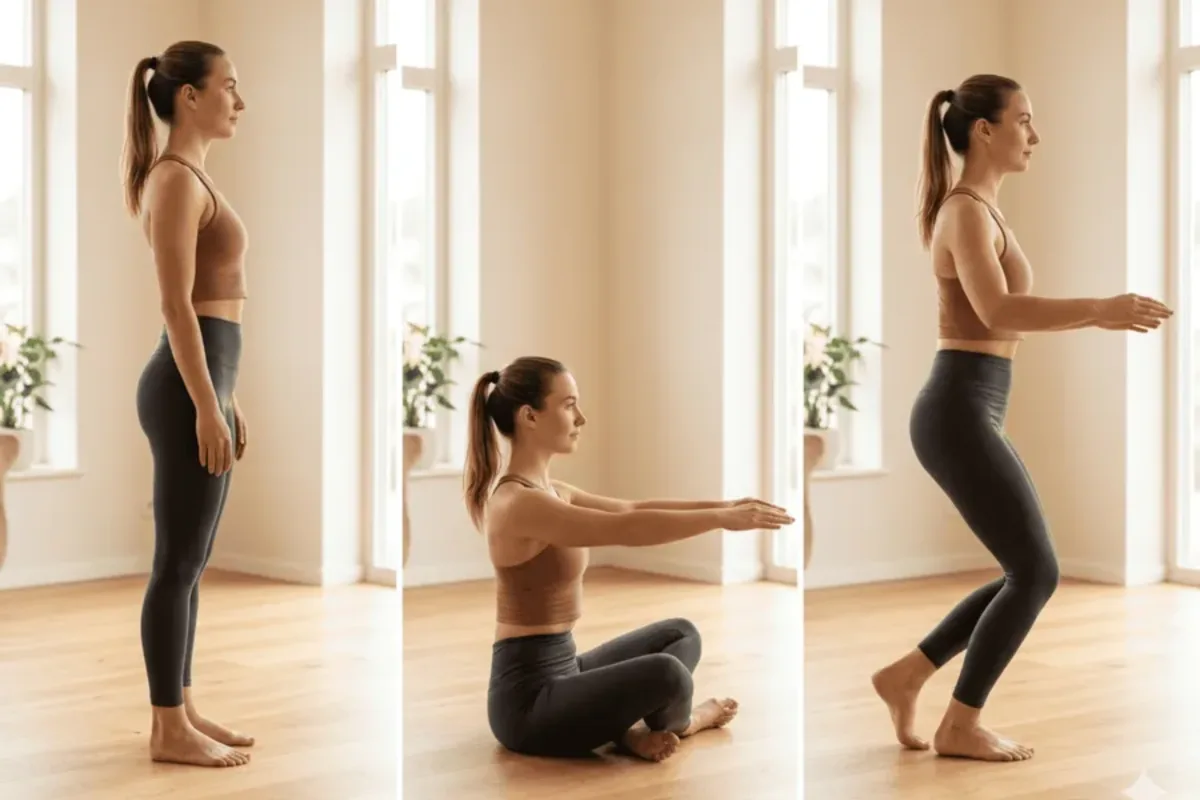
- Do something on the spot. A minute of fast squats or step-ups on a stool, in the middle of a meeting where you're standing anyway.
You'll know it counted when you feel warm and are breathing hard for a moment afterwards. Log it in the app as a short activity. A few small ticks a day is a real habit – and a good place to start when the big workout feels too far away.

Markus Kask
Health coach & founder of GoMotion
Want to follow this up in everyday life?
The GoMotion app helps you build habits around sleep, movement, nutrition and focus – one step at a time.
Get the app