It's two o'clock. You've read the same sentence three times. You know what you need to do, but your head won't cooperate. That's not laziness – it's your attention running out.
The good news: it can be recharged. And one of the fastest ways is to go for a walk among trees.
What happens in your brain
The kind of attention you use at work – staying on a task, filtering out distractions, forcing yourself to keep going – is called directed attention. It's effortful and runs out after a while, a bit like a muscle.
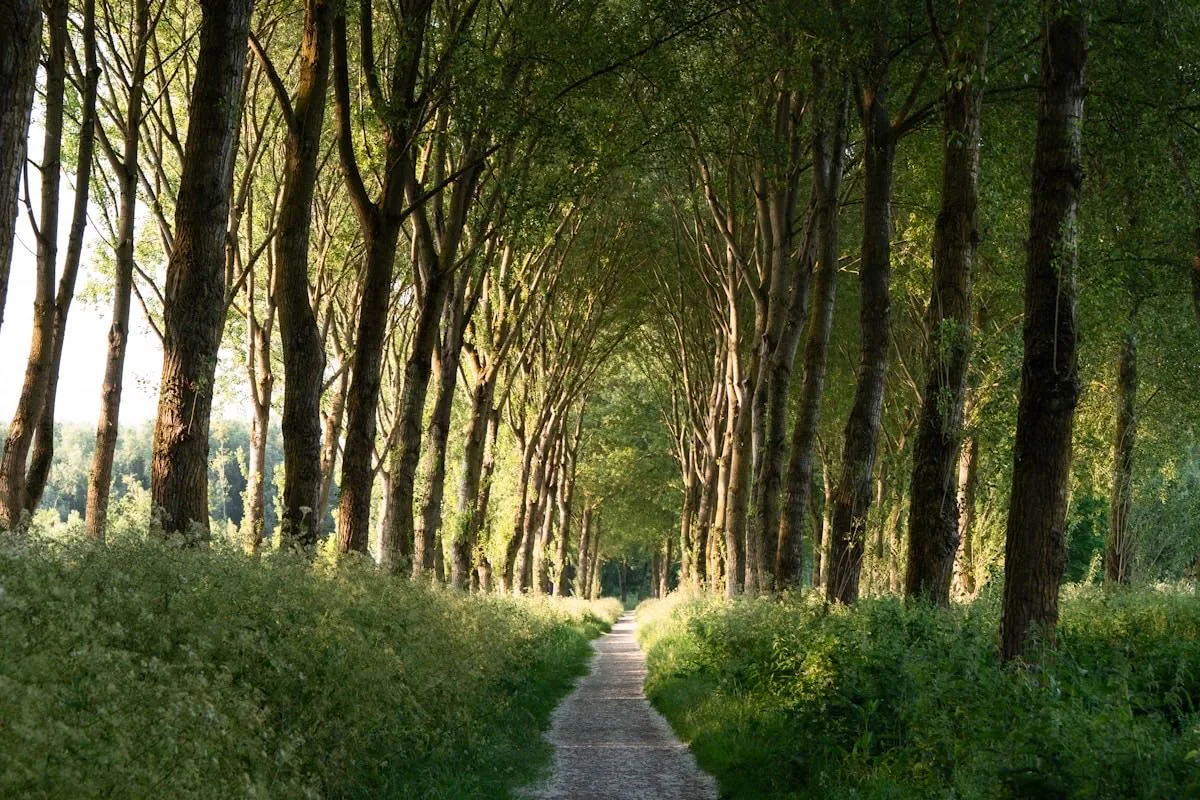
To restore it, your brain needs an environment that asks nothing of it. Nature is exactly that. Leaves moving, a path that bends, light between branches – it holds your attention softly, without any effort on your part. Meanwhile, directed attention gets to rest.
A city street does the opposite. Cars, people, signs, crossings – everything demands that you stay alert. You're walking, but your brain never gets a break.
What the research shows
A study from the University of Michigan (Berman, Jonides & Kaplan, Psychological Science, 2008) had participants take a demanding test of attention and working memory. Then they were sent out for a walk – either through a green park area with trees, or along busy streets downtown. Afterwards they took the test again.
Those who had walked in nature clearly improved their scores. Those who had walked in the city did not. Same people, same kind of test – the only difference was the surroundings.
The researchers also checked whether it was simply about feeling good in nice weather. It wasn't. The effect held even when it was cold and overcast and the walk was hardly a pleasure. It's not the enjoyment doing the work – it's the environment.
What to do
You don't need a forest. You need greenery.
- Choose your route by trees, not by distance. A park, a tree-lined street, a cemetery, a path along the water. If you can choose between the main road and the park behind it – take the park.
- Walk when your head is tired, not when it's fresh. After lunch, between two long meetings, before the task that demands the most.
- Leave the headphones at home. The point is to let your attention rest. Podcasts and music give your brain a new job.
- Ignore the weather. It works on grey days too.
Make it a habit
What makes it stick is tying the walk to a fixed point: "after lunch I walk around the park". Then you don't have to decide every time.
Log the walk in the app and note how your head feels afterwards. After a couple of weeks you'll probably know exactly which route works best – and head there automatically the next time you catch yourself reading the same sentence three times.

Markus Kask
Health coach & founder of GoMotion
Want to follow this up in everyday life?
The GoMotion app helps you build habits around sleep, movement, nutrition and focus – one step at a time.
Get the app