You know you sit too much. Most people do. But there's a detail in the research that rarely gets mentioned: it's not only about how many hours you sit in a day, but about how long you sit in one stretch without getting up.
Two people can sit the same amount in total. One gets up every half hour. The other sits for three hours straight. According to the research, there's a difference between them.
What happens in your body
When you sit still for a long time, the large muscles in your legs and glutes essentially stop working. Blood flow in your legs slows down. Your muscles' uptake of blood sugar and fat from the bloodstream drops, because there's no demand for it. Your body goes into a kind of standby mode.
That's not dangerous in the moment. The problem is when it goes on hour after hour, day after day. When you get up and move for a while, the muscles wake up, blood flow increases and your metabolism gets going again. That's why the breaks matter, not just the total.
What the research shows
A study (Diaz et al., Annals of Internal Medicine, 2017) had a large number of adults wear a hip-mounted activity monitor for a week, so the researchers could see exactly when they sat, for how long at a stretch, and when they moved. Participants were then followed for several years.
The result showed two things at once. Total sitting time was linked to higher mortality – the more people sat, the greater the risk. But the length of each sitting bout also mattered, independently of the total. People who often sat in long unbroken stretches had a higher risk than those who sat the same amount overall but broke it up more often.
The lowest risk was among those who both sat less and kept their sitting bouts short. But even among people who sat a lot, breaking it up often was better than sitting in long stretches. The researchers suggested breaking up sitting roughly every half hour.
What it means for you
You don't need to turn your working day upside down. If your job means sitting in front of a screen, do that. But build in the breaks. They're the part you control, even when you can't change the total.
How to do it
- Set a reminder every half hour. On your watch, your computer, in the app. Keep it simple to follow – stand up, that's enough.
- Tie standing up to something. Get water. Walk to the printer. Take the call standing. If you have a sit-stand desk, switch position.
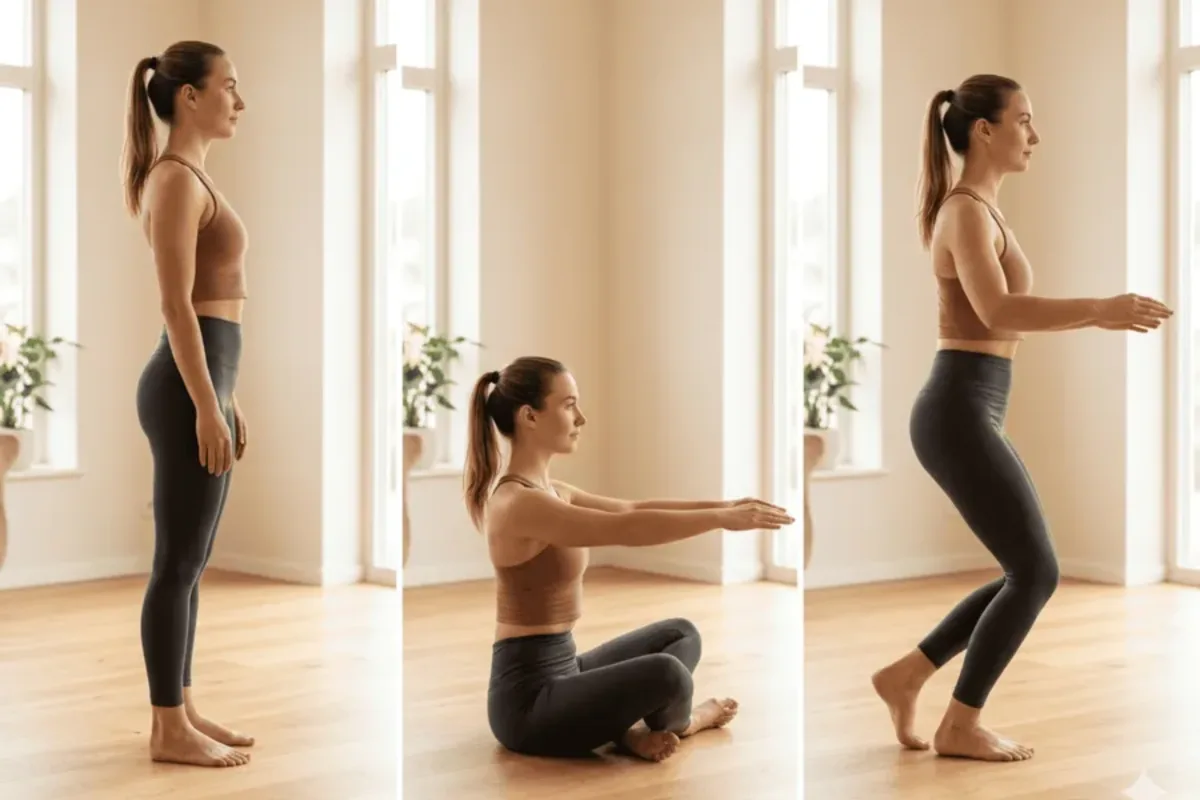
- Move for a minute, don't just stand. Do a lap, a few squats by the desk, stretch your hips. The muscles need to work.
- Watch the long sessions. A long meeting or a journey is harder to break up – but even a quick stand on the way to the toilet makes a difference.
Evenings count too. The sofa after work is often the longest sitting session of the day. Get up between episodes, stand during the ads, take a short lap before you sit back down.
Log your movement breaks in the app if it helps you keep the habit. What matters most isn't how long you stand, but that you don't let the hours pass without getting up.

Markus Kask
Health coach & founder of GoMotion
Want to follow this up in everyday life?
The GoMotion app helps you build habits around sleep, movement, nutrition and focus – one step at a time.
Get the app