Nobody gets excited about the word fiber. It sounds like digestion, like bran, like something your grandmother talked about. It doesn't sell books, and nobody builds an app around it.
Still, it's hard to find a nutrition tip with better evidence. And it's one of the few almost anyone can follow without changing their lifestyle.
What fiber does in your body
Fiber is the part of plants your small intestine can't break down. That sounds like a problem, but it's the whole point. Because fiber travels through the entire system, it affects everything along the way.
In your stomach and small intestine, it slows down how fast food is broken down. The sugar from a meal enters your blood more gradually, and you feel full in a calmer way. In your large intestine, fiber becomes food for your gut bacteria, which in turn produce substances your body benefits from. And it gives your gut something to work with, which keeps it moving.
So it isn't one effect but several, happening at the same time in different parts of the body. That's one reason fiber shows up in so many different areas of research.
What the research shows
A large review commissioned by the World Health Organization (Reynolds et al., The Lancet, 2019) went through both observational studies and controlled trials on fiber and health. The picture was unusually consistent: people who ate the most fiber had a lower risk of cardiovascular disease, type 2 diabetes and colorectal cancer, and lower overall mortality, compared with those who ate the least.
The relationship was also stepwise. More fiber meant lower risk, up to a level where the benefit levelled off. The uncomfortable part of the study was that most people sit well below that level. So this isn't a tip that's already been solved. Most of us still have room.
The fiber in the study came from ordinary food: whole grains, legumes, vegetables, fruit, nuts and seeds. Not from supplements.
How to do it
You don't need to count grams or read ingredient lists. Swapping a few things you already eat is enough:
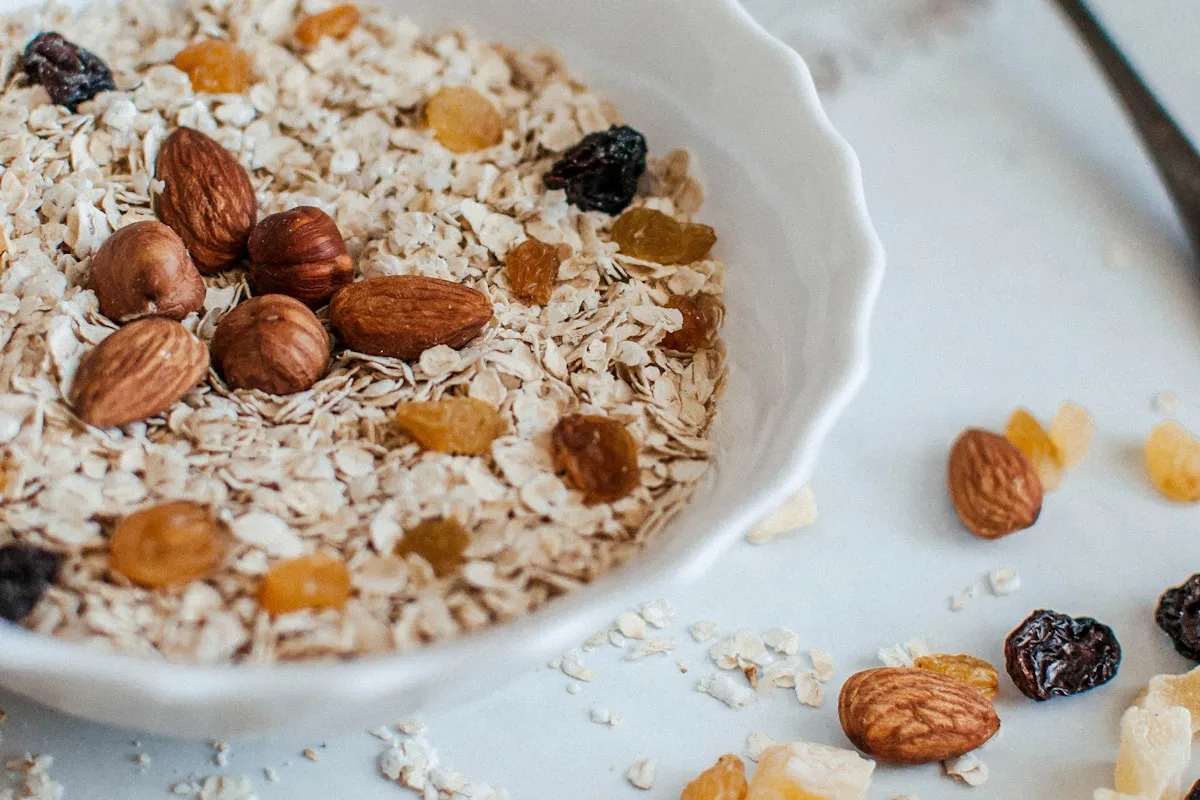
- Whole grain instead of white. Oats for breakfast, wholegrain bread, wholegrain pasta, brown rice. Same meals, more fiber.
- Beans or lentils once a day. In the stew, in the salad, as a spread on toast. Canned works just as well as dried.
- Fruit instead of juice. Juice has the sugar but not the fiber. The apple has both.
- Vegetables with every hot meal. Not as a side on the edge of the plate, but as part of the dish.
- Nuts and seeds as a snack. A handful is enough.
Increase at your own pace. Your gut needs a couple of weeks to adjust, and drink a little more water than usual in the meantime.
Make it a habit
Fiber is a quiet tip. You won't feel anything special after a week. But that's exactly the kind of change that pays off most over time: small, daily, and almost impossible to fail at.
Log your meals in the app for a few days and check how often whole grains, beans and vegetables actually show up. It's usually less than you think – and easy to fix.

Markus Kask
Health coach & founder of GoMotion
Want to follow this up in everyday life?
The GoMotion app helps you build habits around sleep, movement, nutrition and focus – one step at a time.
Get the app